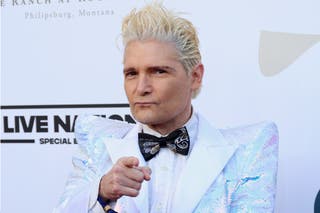
Corey Feldman Drops BOMBSHELL: DWTS' Secret Abuse Culture EXPOSED!
Have you ever wondered what really happens behind the glittering facade of reality TV shows? When cameras stop rolling and lights dim, could there be a darker side to the entertainment industry that remains hidden from public view? This question has haunted former child star Corey Feldman throughout his career, and now he's ready to expose what he claims is a toxic backstage culture on ABC's hit show Dancing with the Stars.
Biography of Corey Feldman
Corey Scott Feldman rose to fame as a child actor in the 1980s, starring in iconic films like The Goonies, Stand by Me, and The Lost Boys. His career began at the tender age of three, and by his teenage years, he was one of Hollywood's most recognizable young stars. However, behind the scenes of his meteoric rise to fame, Feldman claims he endured severe trauma that would shape his entire life and career trajectory.
Personal Details and Bio Data
- John Mulaney And Olivia Munns Secret Sex Tapes Leaked Shocking Footage Exposed
- Nude Leak Exposes Lady Gagas True Identity Her Real Name Is A Bombshell
- Malcolm In The Middle Casts Nude Leak The Shocking Truth They Tried To Hide
| Category | Information |
|---|---|
| Full Name | Corey Scott Feldman |
| Date of Birth | July 16, 1971 |
| Age | 54 years old |
| Birthplace | Los Angeles, California, USA |
| Occupation | Actor, Singer, Activist |
| Notable Works | The Goonies, Stand by Me, The Lost Boys, License to Drive |
| Advocacy | Child abuse prevention, Hollywood abuse exposure |
| Current Status | Reality TV contestant, activist, musician |
The Shocking Elimination That Started It All
The former child star, 54, was the first eliminated on this season of the Dancing with the Stars, but his departure from the ballroom wasn't just about dance scores or audience votes. According to multiple sources, Feldman's early exit sparked a chain reaction of revelations about what he describes as a "toxic backstage environment" that goes far beyond typical reality TV drama.
"There was a lot of stupidity in the mudslinging that went on," Feldman later revealed, hinting at the behind-the-scenes conflicts that never made it to air. His elimination became the catalyst for what would become a much larger conversation about power dynamics, manipulation, and alleged abuse within the entertainment industry's most popular shows.
Breaking His Silence on the Gurvey's Law Radio Show
Feldman detailed his concerns in a preview from an upcoming episode of the Gurvey's Law radio show, released by the Daily Mail. In this explosive interview, he claimed that the workplace environment on Dancing with the Stars was far more complicated than viewers realized. "He said work inside the studio was straightforward, yet the conversation outside it suggested otherwise," the preview revealed, hinting at a stark contrast between what happens on camera versus off.
- Tyler Henrys Secret Brain Surgery Exposed The Emotional Aftermath Will Shock You
- Christmas Eve Walmart Access Exposed Urgent Update On Store Openings You Need Now
- Lincoln Lawyer Season 2 Leaked Nude Scenes That Broke The Internet
The actor, who competed with professional dancer Jenna Johnson, painted a picture of a show where the playful TikToks and lighthearted banter belie a much darker reality. Behind the scenes, Feldman suggests that things aren't nearly as smooth for him and his dance partner as fans might think.
The Headlines That Shook the DWTS Fandom
"Corey Feldman finally breaks his silence, and one single sentence has the entire DWTS fandom spiraling," read one headline that captured the internet's reaction to Feldman's revelations. The actor's comments about the show's backstage culture sent shockwaves through social media, with fans and critics alike debating the validity and implications of his claims.
"The headlines are running wild, the rumors are messier than the ballroom itself, and what he actually meant is… not what people think," Feldman later clarified in a follow-up statement. This confusion highlights the complex nature of his allegations and the difficulty in separating fact from speculation in the fast-moving world of entertainment news.
A History of Speaking Out Against Hollywood Abuse
Actor Corey Feldman's Dancing with the Stars journey came to an abrupt end Tuesday night, and his exit wasn't without drama. However, this isn't the first time Feldman has made headlines for speaking out against what he perceives as systemic abuse in Hollywood. For years, he has positioned himself as a crusader for exposing the industry's darkest secrets.
"The former child actor has been on a crusade to expose predators in the movie industry," Feldman stated in numerous interviews over the past decade. His activism stems from his own experiences as a child star, which he claims included sexual abuse by multiple men in positions of power within Hollywood.
The "An Open Secret" Documentary Connection
"An Open Secret" was a documentary that revealed disturbing details about Hollywood child sexual abuse and assault of young boys. Feldman was prominently featured in this 2014 documentary, where he discussed the systemic nature of child abuse in the entertainment industry. The film, directed by Amy Berg, interviewed several former child actors who shared their experiences of exploitation and abuse.
Another new documentary on HBO, "Showbiz Kids," has child stars discussing similar themes of exploitation and the unique pressures faced by young performers in Hollywood. These documentaries provide crucial context for understanding Feldman's current allegations against Dancing with the Stars and his broader critique of the entertainment industry.
The Legal Implications of Naming Names
"The predator who sexually molested child actors Corey Haim and Corey Feldman could have been prosecuted if police had followed up on the man Feldman named to police," revealed court documents from a 2013 Santa Barbara County Sheriff's Office investigation. This statement underscores the legal complexities surrounding Feldman's allegations and the challenges faced by abuse survivors in seeking justice.
Despite naming his alleged abusers to law enforcement years ago, Feldman claims that no meaningful investigation ever took place. This experience has informed his current approach to speaking out, as he navigates the delicate balance between protecting himself legally while trying to expose what he sees as systemic problems in the entertainment industry.
The Broader Context of Reality TV Culture
Fifth Harmony's Lauren Jauregui, Corey Feldman, Hilaria Baldwin among cast for season 34 of Dancing with the Stars demonstrates how the show continues to attract celebrities from various entertainment sectors. This diverse casting strategy creates a unique dynamic where different personalities and career backgrounds collide, sometimes leading to the exact kind of backstage drama Feldman describes.
On the next Dr. Oz, airing Tuesday, September 27, 2016, former teen star Corey Feldman drops a bombshell. See what he's only revealing to Dr. Oz about abuse in Hollywood. This appearance on a mainstream talk show platform shows how Feldman has strategically used various media outlets to amplify his message about industry abuse.
The Pattern of Early Eliminations and Controversy
"23, Feldman, who was the first contestant eliminated on the 34th," refers to his controversial early departure from the competition. Early eliminations on reality shows often spark speculation about behind-the-scenes politics, voting irregularities, or producer manipulation. Feldman's case appears to be particularly complex, given his status as a former child star and his vocal criticism of industry practices.
The pattern of early eliminations leading to controversy isn't unique to Feldman's season. Throughout Dancing with the Stars history, several contestants have left the show under controversial circumstances, leading to speculation about the authenticity of the competition and the role of producers in shaping narratives.
The Cultural Impact of Feldman's Revelations
Corey Feldman calls out Dancing with the Stars' 'toxic' BTS culture 28 views 2 weeks ago represents just one of many videos and articles that have emerged since Feldman first made his allegations public. The relatively low view count on this particular video might suggest that while his claims are generating headlines, they're not necessarily translating into sustained public engagement.
However, the cultural impact of Feldman's revelations extends beyond view counts and social media engagement. His willingness to speak out about alleged abuse, even at the potential cost of his career and reputation, contributes to a broader cultural conversation about power, exploitation, and accountability in the entertainment industry.
The Future of Reality TV Accountability
The question of how to create safer, more ethical working environments on reality TV shows remains largely unanswered. Feldman's allegations against Dancing with the Stars highlight the need for better oversight, clearer reporting mechanisms, and stronger protections for contestants who may be vulnerable to various forms of exploitation or abuse.
As the entertainment industry continues to grapple with issues of power, consent, and accountability, Feldman's case serves as a reminder that even seemingly glamorous reality TV shows may harbor problems that extend far beyond what viewers see on screen. The challenge moving forward will be creating systems that protect participants while maintaining the entertainment value that makes these shows popular in the first place.
Conclusion
Corey Feldman's allegations about Dancing with the Stars represent more than just another celebrity controversy – they're part of a larger conversation about abuse, power, and accountability in the entertainment industry. Whether or not every detail of his claims proves accurate, his willingness to speak out has sparked important discussions about the working conditions and power dynamics that exist behind the scenes of popular reality TV shows.
The former child star's journey from 1980s heartthrob to industry whistleblower illustrates the complex relationship many entertainers have with the systems that both made them famous and, they claim, caused them harm. As audiences become more aware of these issues, the pressure on production companies, networks, and the industry as a whole to create safer, more ethical working environments will likely continue to grow.
What remains clear is that Feldman's allegations, regardless of their ultimate veracity, have succeeded in one crucial aspect: they've made viewers think twice about what really happens when the cameras stop rolling and the lights go down on their favorite reality TV shows.