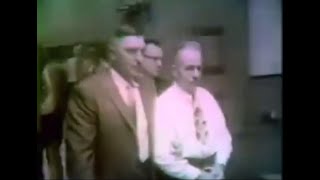
Ed Gein's Shocking Nude Photos Leaked: Bundy's Dark Secret Revealed!
What really happened in the isolated farmhouse of Plainfield, Wisconsin? When authorities uncovered the gruesome truth about Ed Gein in 1957, America was left reeling from the shocking discoveries that would forever change our understanding of criminal psychology. But recent claims linking Gein to the capture of Ted Bundy have reignited interest in this dark chapter of American history, raising questions about connections between two of the nation's most notorious killers.
The Dark Origins of Ed Gein: A Biography
Edward Theodore Gein was born on August 27, 1906, in La Crosse County, Wisconsin, to George Philip Gein and Augusta Wilhelmine Gein. His childhood was marked by severe isolation and an overbearing, fanatically religious mother who dominated his life. The family moved to a 155-acre farm outside Plainfield, Wisconsin, where young Ed would spend most of his life in virtual seclusion.
| Personal Detail | Information |
|---|---|
| Full Name | Edward Theodore Gein |
| Date of Birth | August 27, 1906 |
| Place of Birth | La Crosse County, Wisconsin |
| Date of Death | July 26, 1984 |
| Place of Death | Mendota Mental Health Institute, Wisconsin |
| Known For | Grave robbing, murder, human trophies |
| Victims | Confirmed: 2; Suspected: More |
| Criminal Charges | Murder, grave robbery |
| Sentence | Committed to psychiatric institution |
Gein's father died in 1940, followed by his brother Henry in 1944 under mysterious circumstances that some investigators believe may have involved foul play. His mother, the center of his universe, passed away in 1945, leaving Ed completely alone and descending into the madness that would define his later crimes.
- What Really Happened To Chandi In The Bahamas The Leaked Sex Scandal That Broke The Internet
- Leaked Sex Confession What Shannen Doherty Really Thought Before She Died Will Break Your Heart
- Jd Vances Wifes Secret Leak Exposes Their Shocking Double Life
The Crimes That Shocked America
His crimes, committed around his hometown of Plainfield, Wisconsin, gathered widespread notoriety in 1957 after authorities discovered that he stole corpses from local graveyards and fashioned keepsakes from their bones and skin. The investigation began on November 16, 1957, when police went to Gein's farmhouse to investigate the disappearance of local hardware store owner Bernice Worden.
What they found inside defied comprehension. The farmhouse contained furniture upholstered with human skin, bowls made from skulls, masks crafted from faces, and various other items created from human remains. Gein had been visiting local cemeteries at night, exhuming recently buried bodies, particularly those of women who resembled his deceased mother.
The precise nature and public availability of Ed Gein victims photos remain largely within the confines of investigative archives and academic study. While crime scene photographs exist, they are typically restricted to law enforcement and serious researchers due to their disturbing content and the privacy rights of victims' families.
- Is Anna Kendrick Married Shocking Leaked Documents Expose Her Hidden Life
- The Hidden War Inside Bananarama Leaked Messages Expose Shocking Betrayal
- Nude Leak Exposes Lady Gagas True Identity Her Real Name Is A Bombshell
The Netflix Series and the Bundy Connection
With a new streaming series reigniting fascination with one of America's most notorious killers, Ed Gein's story has once again emerged from the shadows of central Wisconsin. But for those who know the state's darker history, Gein never really left. His legacy haunts Plainfield's quiet streets, influences our understanding of horror in popular culture, and draws curious visitors to Wisconsin's most infamous location.
An episode of Netflix's "Monster: The Ed Gein Story" suggests the killer may have helped the FBI catch Ted Bundy. This claim has sparked intense debate among true crime enthusiasts and historians. Learn if the pair had a real-life connection, and whether this dramatic narrative element has any basis in historical fact.
The suggestion that Gein assisted in capturing Bundy appears to be a dramatic embellishment rather than historical fact. Gein died in 1984, while Bundy was executed in 1989, and there's no documented evidence of any interaction between the two killers. This narrative device serves to connect two infamous cases but lacks factual foundation.
The Crime Scene Investigation
Explore the life and legacy of Wisconsin grave robber and murderer Ed Gein, as told through photos, videos, and unique research into the butcher of Plainfield. Police during a press conference displaying a table full of evidence found in the Gein farmhouse that showed shrunken heads, a lamp shade made out of human skin, human body parts, and other evidence that demonstrated the demented nature of Ed Gein's crimes.
The evidence displayed was so shocking that veteran investigators were visibly disturbed. Among the items recovered were:
- Human skin used to upholster chairs and create clothing
- Skulls used as bedposts
- A corset made from a female torso
- Face masks created from actual human faces
- Bowls fashioned from human skulls
- A belt made from human nipples
- Various preserved organs and body parts
See the entire archive of the Ed Gein crime scene photos located in our gallery here. These images, while disturbing, provide crucial documentation of one of America's most bizarre criminal cases and have been studied extensively by criminologists and psychologists seeking to understand the mind of a serial killer.
Inside the House of Horrors
Then, authorities stepped inside Ed Gein's house of horrors — see the crime scene photos in the gallery below — and realized just how disturbed he was. The farmhouse, which had no electricity or running water, was filled with decay, filth, and the unmistakable odor of death. Rooms were piled high with newspapers, magazines, and various collected items, creating narrow pathways through the debris.
The most disturbing discoveries were made in the summer kitchen and shed areas, where Gein had conducted much of his gruesome work. The smell was so overwhelming that some investigators had to leave the scene to vomit. The combination of decomposition, chemicals used for preservation, and general filth created an environment that tested the limits of human endurance.
The Historical Significance
The case of Edward Theodore Gein remains one of the most chilling and historically significant in American criminal history. His crimes influenced countless horror films, books, and television shows, serving as inspiration for characters like Norman Bates in "Psycho," Leatherface in "The Texas Chainsaw Massacre," and Buffalo Bill in "The Silence of the Lambs."
Gein's case also marked a turning point in how law enforcement and the public viewed serial killers and grave robbers. It highlighted the need for better cemetery security, more thorough missing persons investigations, and a deeper understanding of the psychological factors that drive such extreme criminal behavior.
The Mother Complex and Psychological Profile
Join us as we uncover the shocking secrets behind his chilling story, from his disturbing obsession with his mother to his gruesome collection of human remains. Gein's relationship with his mother was the defining factor of his psychological development. Augusta Gein was a domineering, religious fanatic who constantly preached about the evils of women and the sinful nature of sexuality.
After her death, Gein began creating a "woman suit" that he hoped would allow him to literally become his mother. This disturbing attempt at identity transformation represents one of the most extreme cases of maternal obsession in criminal history. Psychiatrists who examined Gein diagnosed him with schizophrenia, necrophilia, and severe sexual dysfunction, all stemming from his mother's psychological abuse.
The Victims and the Body Count
Did Ed Gein help capture Ted Bundy? How many people did he kill? These questions continue to fascinate true crime enthusiasts. Officially, Gein was convicted of only two murders: Bernice Worden and Mary Hogan. However, investigators found evidence suggesting he may have been responsible for additional deaths.
The number of grave robberies is also unclear, with estimates ranging from a dozen to over thirty bodies that Gein admitted to exhuming. The difficulty in determining an exact count stems from the poor record-keeping of rural cemeteries in the 1940s and 1950s, as well as Gein's own unreliable memory and tendency to minimize his crimes.
What the Netflix Series Gets Wrong
Here's what the Netflix series "Monster" gets wrong about Ed Gein. While the series captures the general atmosphere of the case and provides compelling drama, it takes significant liberties with historical facts for entertainment purposes.
The Bundy connection is perhaps the most egregious departure from reality, but other elements are also dramatized or invented. The series portrays Gein as more calculating and socially adept than he actually was. In reality, Gein was described by those who knew him as simple-minded, socially awkward, and childlike in many ways.
The timeline of events is also compressed and altered for dramatic effect. The investigation, trial, and commitment proceedings took place over several years, but the series presents them as happening in quick succession. Additionally, some characters are composites of multiple real people, and certain events are invented entirely.
The Cultural Impact
Ed Gein's influence extends far beyond true crime circles. His case has become a touchstone for discussions about mental illness, criminal psychology, and the nature of evil. The farmhouse itself became a macabre tourist attraction until it burned down in 1958 under suspicious circumstances, likely arson by someone who wanted to prevent further exploitation of the tragedy.
The case also raised important questions about rural isolation, mental health treatment, and the responsibility of communities to identify and help troubled individuals before they turn to violence. Plainfield, once a quiet farming community, became synonymous with horror, and many residents still prefer not to discuss the case that made their town infamous.
Conclusion
The story of Ed Gein remains one of the most disturbing chapters in American criminal history. From his isolated upbringing in rural Wisconsin to his shocking crimes and their lasting cultural impact, Gein's case continues to fascinate and horrify us more than six decades later. The recent Netflix series has introduced a new generation to this gruesome tale, though viewers should approach its dramatic elements with healthy skepticism.
What makes Gein's story particularly unsettling is not just the brutality of his crimes, but the ordinary appearance he presented to the world. He was seen as a quiet, simple man who helped neighbors and attended church regularly. This contrast between public perception and private horror serves as a chilling reminder that evil often wears a mask of normalcy.
As we continue to study cases like Ed Gein's, we gain valuable insights into the darkest corners of the human psyche. While we may never fully understand what drives someone to commit such atrocities, examining these cases helps law enforcement, mental health professionals, and society as a whole better identify warning signs and potentially prevent future tragedies.