Mick Jagger's Nude Dance Rehearsal Exposed: The Truth Behind 'Moves Like Jagger'
Have you ever wondered what goes on behind the scenes when rock legends prepare for their iconic performances? The Rolling Stones frontman Mick Jagger has been captivating audiences for over six decades with his electrifying stage presence, but what really happens during those intense rehearsal sessions? When we think about "Moves Like Jagger," we often picture the Maroon 5 hit song, but the real story behind Mick Jagger's legendary dance moves is far more fascinating—and surprisingly controversial.
Mick Jagger: The Man Behind the Moves
Biography and Personal Details
| Full Name: | Sir Michael Philip Jagger |
| Born: | July 26, 1943 (age 80) |
| Birthplace: | Dartford, Kent, England |
| Occupation: | Singer, songwriter, actor, film producer |
| Years Active: | 1960–present |
| Band: | The Rolling Stones |
| Children: | 8 (including Lucas Maurice Morad Jagger) |
| Notable Awards: | Knighthood, Grammy Awards, Rock and Roll Hall of Fame |
Mick Jagger wasn't born into stardom—he was born into a middle-class family in Dartford, Kent, where his father worked as a teacher and his mother as an Australian-born hairdresser. From these humble beginnings emerged one of the most recognizable figures in rock history, whose dance moves would become as legendary as his voice.
- How A Secret Sex Tape Leak Destroyed My Best Friends Life And Our Bond
- Philly Plane Crash 2025 Nude Photos And Sex Tapes Leaked From Crash Site
- Mick Jaggers Nude Dance Rehearsal Exposed The Truth Behind Moves Like Jagger
The Natural Evolution of a Rock Icon
Dancing on stage was never a conscious decision for Mick Jagger. Rather, it was just something that had to happen. From his early days performing at small clubs in London, Jagger's body seemed to have a mind of its own when the music started playing. His movements weren't choreographed in the traditional sense—they were raw, spontaneous expressions of the music flowing through him.
In the early 1960s, when The Rolling Stones were just beginning to make waves in the London music scene, Jagger's stage presence was already turning heads. Unlike other performers who stuck to rigid choreography, Jagger moved with an uninhibited freedom that seemed to defy the conventions of the time. His body became an instrument itself, responding to the rhythm and blues that defined the Stones' sound.
Unapologetically Himself: The Birth of Jagger's Signature Style
In other words, Mick Jagger was unapologetically himself, and one iconic way he often expressed himself was through dance. This authenticity became his greatest asset. While other performers of the era were carefully crafting their images, Jagger simply let his natural instincts take over.
- Landman Season 2 Delayed Shocking New Details About The Release Emerge
- Amys 1000 Lb Sisters Leaked Confession What They Hid Will Terrify You
- The Dark Side Of The Prairie Cast Members Scandalous Lives Exposed In Never Before Seen Footage
His dance style evolved organically, influenced by everything from the blues musicians he admired to the social movements of the 1960s. Jagger absorbed elements of African American dance traditions, the emerging counterculture's free-spirited movements, and his own athletic background (he was a competitive gymnast in school). The result was a unique fusion that was entirely his own.
The Controversial Edge: When Dance Became Taboo
Not only were Jagger's moves weirdly entertaining, but they were also taboo, visceral, and to some, sexually explicit. In an era when television was still relatively conservative, Jagger's pelvic thrusts and suggestive hip movements caused quite a stir. The Rolling Stones' 1965 performance on The Ed Sullivan Show became infamous when Jagger was forced to change the lyrics of "Let's Spend the Night Together" to "Let's Spend Some Time Together" due to pressure from network executives.
This controversy only fueled Jagger's reputation as a rebel and helped establish his dance style as a form of cultural rebellion. His movements weren't just about entertainment—they were statements about freedom, sexuality, and breaking societal norms. Parents were outraged, teenagers were enthralled, and the media couldn't get enough of the controversy.
The Modern Era: Jagger's Dance Evolution Continues
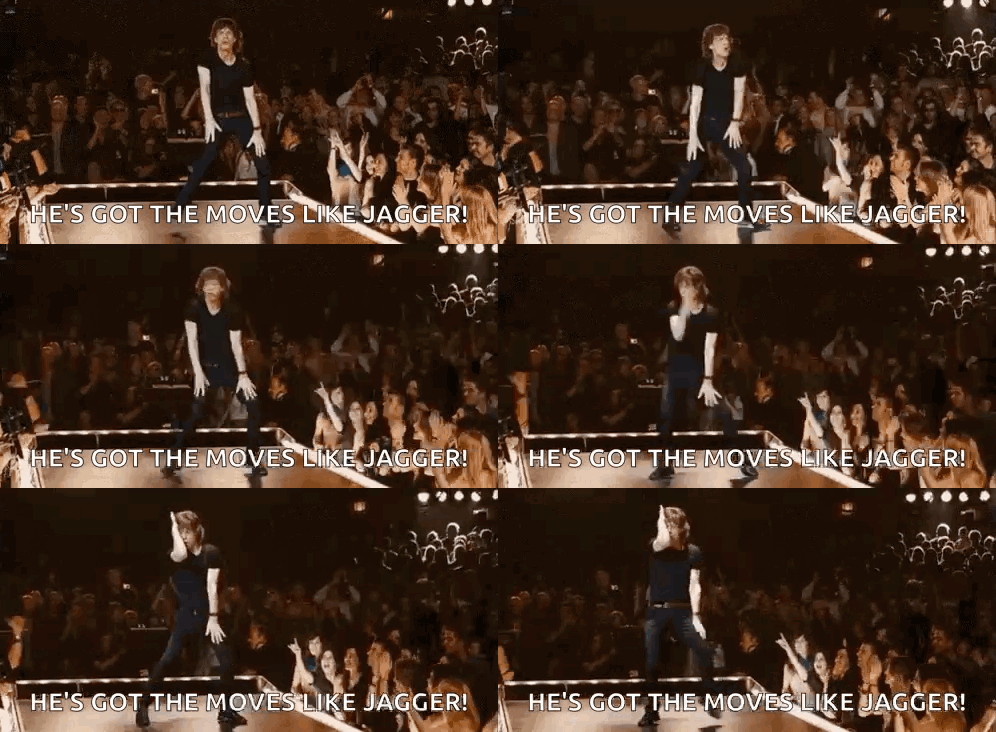
Fast forward to 2023, and Mick Jagger has shared an Instagram reel of himself dancing to "Moves Like Jagger" at a bar. The rolling stones frontman Mick Jagger shared a video of himself dancing to the song "moves like Jagger" at a bar on Instagram. This moment represents a beautiful full-circle journey—from the controversial youth who shocked audiences to the elder statesman of rock who can still move with the best of them.
The video shows Jagger, now in his 80s, effortlessly working the dance floor to a song that was written about his iconic moves. It's a testament to his enduring vitality and the timeless nature of his dance style. The clip quickly went viral, with fans and fellow musicians alike marveling at Jagger's seemingly ageless energy.
The Maroon 5 Connection: A Full Circle Moment
Adam Levine saw a video of Mick Jagger allegedly dancing to the Maroon 5 hit "Moves Like Jagger," and he shared his thoughts. It's a full circle moment for Adam Levine after seeing Mick Jagger bust some moves out on the dance floor while a live band plays "Moves Like Jagger" in the background. The song, released in 2011, was Maroon 5's tribute to Jagger's legendary dance moves, and now seeing the man himself dancing to it creates a perfect loop of musical homage.
Levine, who co-wrote the song with his bandmate Jesse Carmichael, has often spoken about Jagger's influence on his own stage presence. In interviews, he's described how studying Jagger's performances helped him develop his own confidence as a performer. Seeing Jagger dance to their song must have been a surreal experience for the Maroon 5 frontman—like watching your childhood hero validate your artistic choices.
The Price of Fame: Touring with Divas and Troubled Times
It also helps if you happen to tour with the best diva of them all. One of the most troubled. Throughout his career, Jagger has shared stages and tours with some of the biggest names in music, each experience shaping his performance style. From sharing bills with Tina Turner (whose energy and dance moves certainly influenced Jagger) to navigating the complex dynamics within The Rolling Stones themselves, each tour has been a learning experience.
The Rolling Stones' extensive touring schedule has been both a blessing and a curse. While it's allowed Jagger to hone his craft and build his legendary stamina, it's also come with significant personal costs. The constant travel, the pressure to perform at the highest level night after night, and the temptations that come with rock stardom have all taken their toll on Jagger and his bandmates over the decades.
Behind the Scenes: Rehearsal Footage and Unreleased Gems
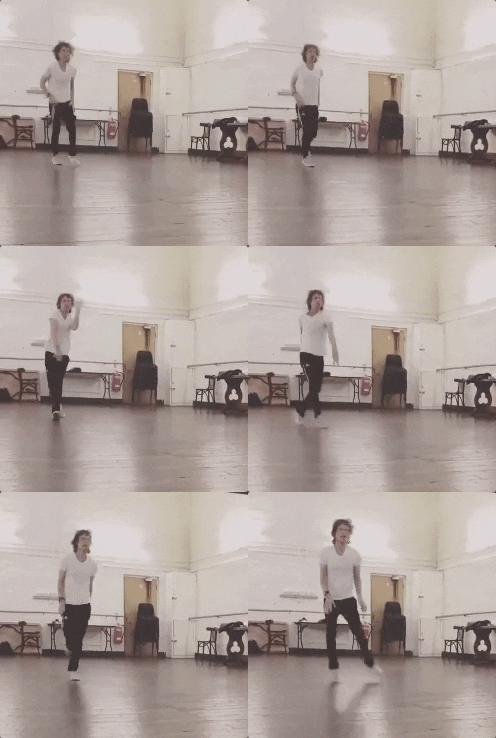
Check out this compilation of Mick Jagger rehearsal footage and unreleased Rolling Stones song called "Dreams"… • Rolling Stones unreleased "Dreams" (2002) #r. This rare footage offers a glimpse into the meticulous preparation that goes into creating the seemingly effortless performances that Jagger is known for.
The rehearsal footage shows a different side of Jagger—one that's focused, sometimes frustrated, and always working to perfect every movement. Unlike the wild abandon of his stage performances, these rehearsals reveal the discipline and dedication required to maintain his legendary status. The unreleased track "Dreams" provides the perfect soundtrack to these intimate moments, showcasing the musical chemistry between Jagger and his bandmates during their creative process.
Family Dynamics: When Sons Critique Their Rock Star Dads
Mick Jagger shared a video Wednesday of him dancing at an outdoor venue—but he didn't get satisfaction from son Lucas. (Watch the video below.) "Dadda who put u up to this," Lucas Maurice Morad Jagger wrote in the Instagram comments. Mick Jagger's son Lucas gave him a ribbing for his moves.
This exchange highlights the universal experience of children being embarrassed by their parents, even when that parent happens to be one of the most famous rock stars in history. Lucas's comment, while playful, touches on something deeper—the way Jagger's dance moves have always been a source of both admiration and controversy.
The relationship between Jagger and his children has been complicated by his fame and his often chaotic personal life. With eight children by five different women, Jagger's role as a father has sometimes taken a backseat to his career. However, moments like this Instagram exchange show that despite the complications, there's still a normal family dynamic at play.
The Viral Sensation: Dancing to "Moves Like Jagger"
The Rolling Stones' Mick Jagger has posted a hilarious video of himself at a bar dancing along to a band playing Maroon 5's "Moves Like Jagger." This latest viral moment encapsulates everything that makes Jagger such an enduring figure in popular culture. At an age when most people are slowing down, Jagger is still out there, dancing with the same uninhibited joy that made him famous.
The video shows Jagger working the dance floor with his characteristic hip swivels and arm movements, clearly enjoying himself despite (or perhaps because of) the irony of dancing to a song about his own moves. The band seems equally delighted to have the rock legend as an impromptu dance partner, and the crowd's reaction ranges from shock to pure joy.
What makes this moment particularly special is how it bridges generations. Young fans who know Jagger primarily through the Maroon 5 song get to see the real deal in action, while older fans get to witness their hero still performing at the top of his game, just in a different context. It's a reminder that great performers never really retire—they just find new stages.
The Truth Behind the Legend
So what is the real story behind "Moves Like Jagger"? It's not just about the dance moves themselves, but about the attitude that drives them. Jagger's dancing represents freedom—freedom from convention, from expectation, from the constraints that society tries to place on self-expression.
The nude dance rehearsal rumors that sometimes circulate are likely exaggerated, but they speak to something essential about Jagger's approach to performance. He's never been afraid to bare himself—emotionally, physically, artistically. Whether he's actually danced nude in rehearsal or not, the spirit of that idea is accurate: Jagger performs with a vulnerability and authenticity that few artists can match.
His dance style evolved not through formal training but through a willingness to let go and trust his instincts. This approach has made his performances feel spontaneous even when they're carefully crafted. It's why fans never tire of watching him—each performance feels like a unique moment of genuine expression rather than a rehearsed routine.
Conclusion
Mick Jagger's dance moves are more than just entertaining choreography—they're a form of cultural expression that has evolved over six decades. From the controversial performances of the 1960s to the viral dance videos of today, Jagger has remained true to himself while constantly adapting to new contexts and audiences.
The truth behind "Moves Like Jagger" isn't found in any single rehearsal or performance, but in the consistent authenticity that Jagger has brought to his craft. Whether he's dancing to his own music or to a song written about him, whether he's performing for thousands at a stadium or for a handful of people at a bar, Jagger brings the same energy, the same commitment, and the same unapologetic self-expression.
In an age of carefully curated social media personas and focus-group-tested performances, Jagger's willingness to just be himself—moves, controversies, and all—remains refreshing and inspiring. His dance isn't just about the physical movements; it's about the freedom to express oneself fully and without apology. And that, perhaps more than any specific step or routine, is what has made "Moves Like Jagger" truly legendary.